"Turning a cheap commercial vacuum cleaner into a useful Open Source mapping tool"
- Track: Robotics and Simulation
- Room: UB2.147
- Day: Saturday
- Start (UTC+1): 10:35
- End (UTC+1): 11:00
- Chat: Join the conversation!
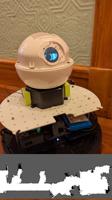
Robot Vacuums are a pretty common item in many households around the world. They've also become a fairly standard item for robot hobbyists to hack on and use as cheap, open platforms for experiments in mobile bases. The classic "Turtlebot" platform has seen many incarnations, as the iRobot Create series, the Kobuki base, the Neato BotVac and now lives on in the "Hackerbot" from HackerBot Industries(https://www.hackerbot.co/). It has an open command set, options for an arm, animated head and SDK to support the development of character-like human-robot interactions. It does autonomous mapping of whatever space it was in at the push of a button. Unfortunately, the map is stored in an internal proprietary format, accessible through an app you download onto your phone.
I have a number of robots at home and in my lab, all of which run ROS. Surely there must be some way to hack out the map and convert it into a ROS-compatible format that my other robots could use! My talk would be discussing the steps I took to make this happen, the FOSS packages I used and the resulting tool.
This is not my first excursion into hacking robot mapping and sensors, so I'll also present some tips and tricks I've learned over the years to make seemingly proprietary robot subsystems more open and generally usable.
Mapping tool GitHub: https://github.com/jetdillo/hackerbot-maptools
Hackerbot Base: https://www.hackerbot.co/
My robot consulting business: https://www.familiarrobotics.com
Speakers
 |
Stef Dillo |