Why Open Source Looks Different in China: When Vendor Strategies, Policy Signals, and Market Pressure Converge
- Track: /dev/random
- Room: H.2215 (Ferrer)
- Day: Sunday
- Start (UTC+1): 09:00
- End (UTC+1): 09:15
- Chat: Join the conversation!
Open source is often discussed through a familiar narrative: community-led collaboration, neutral governance, and voluntary participation driven by shared technical interests.
However, when looking at China in 2025, open source often looks noticeably different — not because different tools are used, but because the constraints shaping them are fundamentally different.
This talk explores how open source in China has evolved under the convergence of three forces: vendor-led engineering realities, explicit policy signals, and intense market pressure — especially under economic tightening and global uncertainty. In this environment, open source is frequently not a starting ideal, but a practical mechanism: to establish de facto standards, to gain global trust, and increasingly, to remain viable through international adoption.
The talk examines why many projects are company-led rather than community-born, why governance often lags behind engineering, and why “going global” is less about expansion than about survival.
The perspective offered is not representative of any state or corporation, but comes from someone who has worked between Taiwanese, Chinese, and global open source communities for over a decade. The goal is not to defend or promote a particular model, but to provide developers familiar with Western open source traditions with a clearer mental framework for understanding how open source behaves under non-ideal conditions — and what that means for future collaboration and governance in an increasingly interconnected open source world.
Speakers
 |
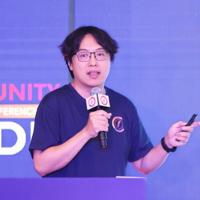
Richard Lin |