Movement: a Python toolbox for analysing motion tracking data
- Track: Bioinformatics & Computational Biology
- Room: K.4.601
- Day: Saturday
- Start: 17:40
- End: 17:55
- Video only: k4601
- Chat: Join the conversation!
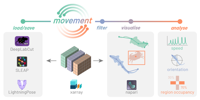
The study of animal behaviour has been transformed by the increasing use of machine learning-based tools, such as DeepLabCut and SLEAP, which can track the positions of animals and their body parts from video footage. However, there is currently no user-friendly, general-purpose solution for processing and analysing the motion tracks generated by these tools. To address this gap, we are developing movement, an open-source Python package that provides a unified interface for analysing motion tracking data from multiple formats. Initially, movement prioritised implementing methods for data cleaning and kinematic analysis. We are now focusing on expanding its data visualization capabilities and on developing metrics to analyze how animals interact with each other and with their environment. Future plans include adding modules for specialised applications such as pupillometry and collective behaviour, as well as supporting integration with neurophysiological data analysis tools. Importantly, movement is designed to cater to researchers with varying levels of coding expertise and computational resources, featuring an intuitive graphical user interface. Furthermore, the project is committed to transparency, with dedicated engineers collaborating with a global community of contributors to ensure its long-term sustainability. We invite feedback from the community to help shape movement's future as a comprehensive toolbox for analysing animal behaviour. For more information, please visit movement.neuroinformatics.dev.
Speakers
 |
Niko Sirmpilatze |